The Quantum Engine of Faith — The Observer and the Wave
Listen to this article
 Quantum observer effect
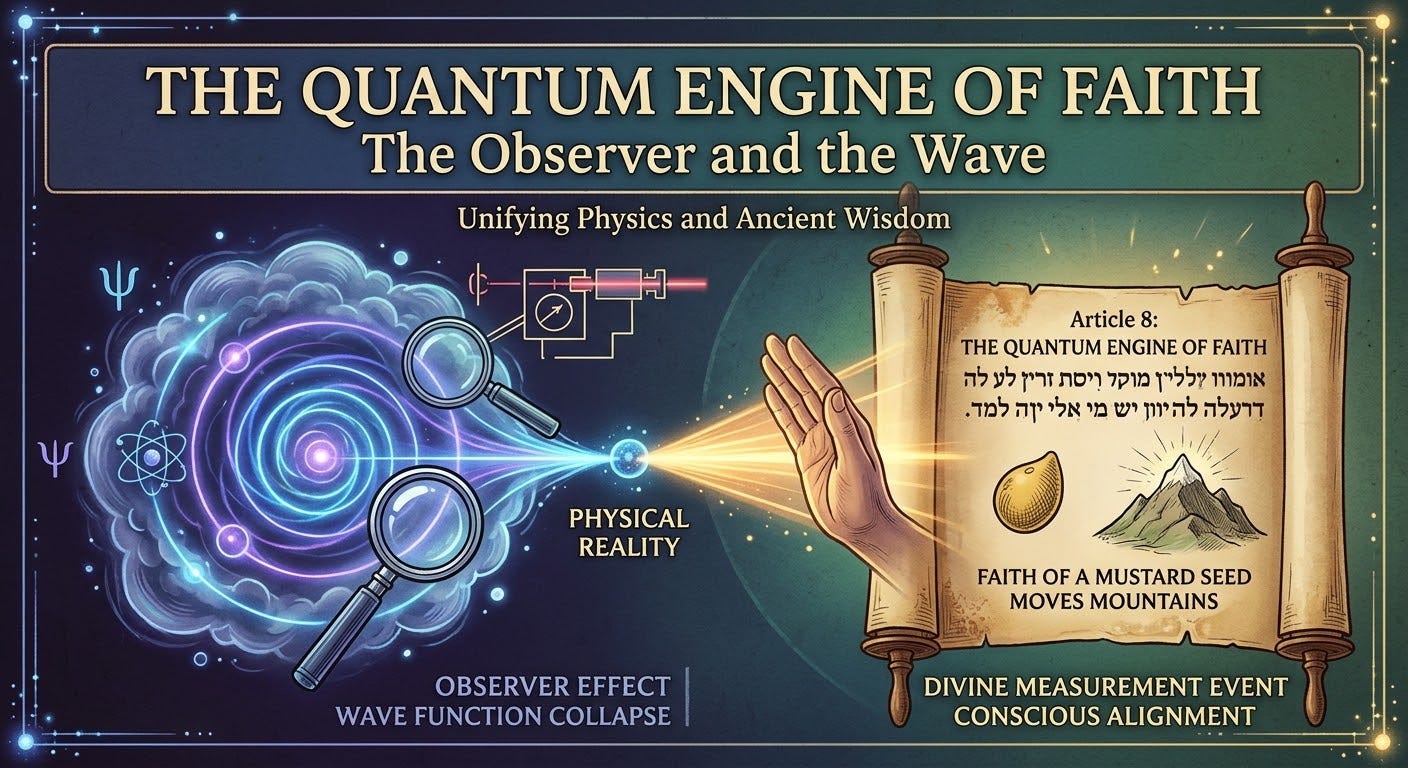
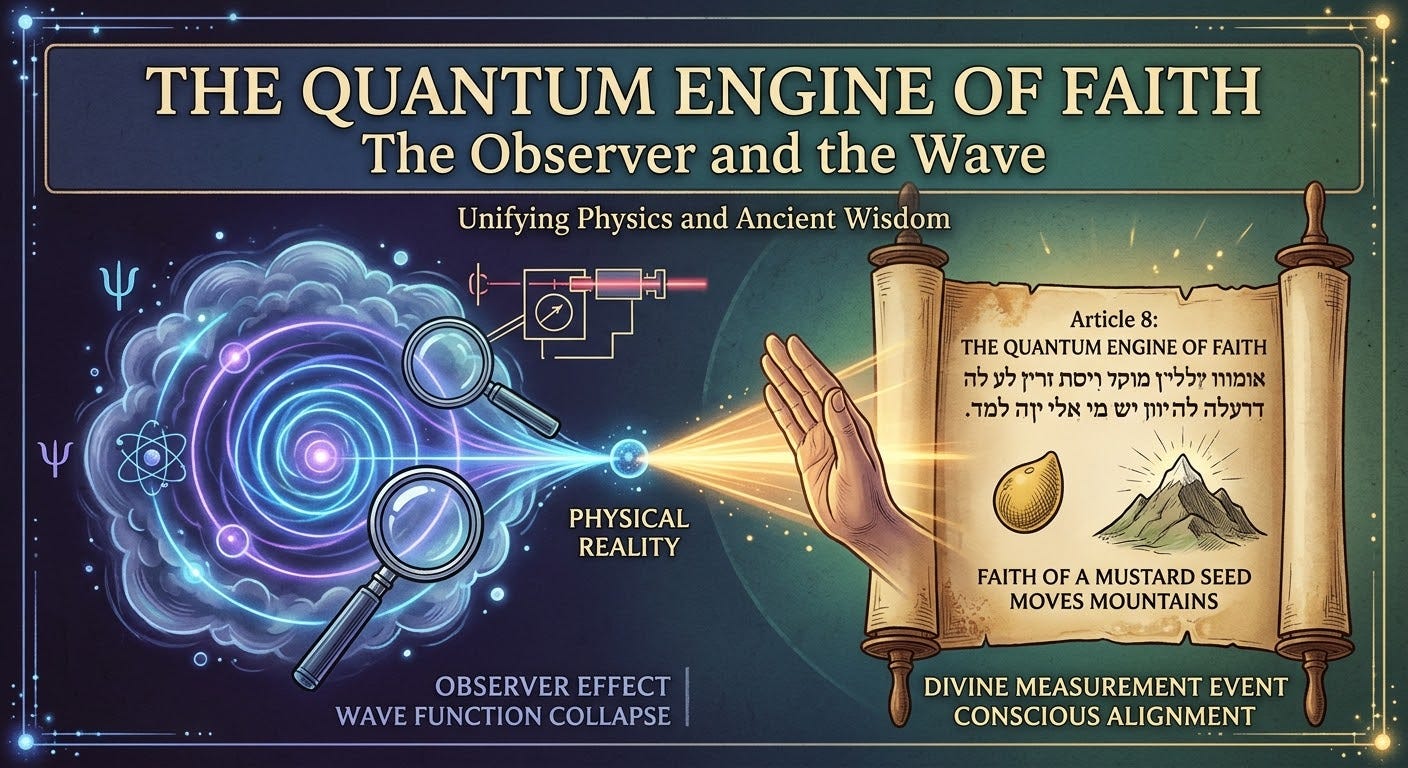
Physics treats the observer effect as one of its most problematic paradoxes: subatomic particles sitting in a mass of pure probability until an observer or measuring instrument interacts with them. The moment that measurement happens, the wave function collapses. The outcome is decided. The system "chooses" what it becomes based entirely on the act of observation.
Mainstream science explains this as an isolated mystery of the microscopic world. Yet thousands of years before quantum mechanics was formalized, this principle was already stated in simple, absolute terms by Jesus: if you have the faith of a mustard seed, you can command a mountain to move, and it will move.
When you place Schrödinger’s wave equation alongside the faithful observer, the correlation is apparent. Faith is not passive emotional longing; it is the active alignment of a conscious mind with the Creator's underlying architecture. Prayer and the focus of the saints act as the ultimate measurement event, solidifying unformed potential into concrete physical reality.
Why, then, does secular science adamantly refuse to acknowledge a unification that is already standing directly in front of us? Why invent increasingly convoluted, unrealistic interpretations, like infinitely branching parallel universes. Rather than admit that ancient prophets described the exact operational mechanics of creation?
 Wave function collapse
The motivation is as old as humanity's first failure: pride.
To acknowledge that the observer effect is divine engineering requires accepting that human capacity has strict, hard-coded limits. It means recognizing that we are users inside a created framework, not the system architects. The "infinity problems" in modern physics and the paradoxes of quantum mechanics are not errors waiting for a human workaround; they are the intentional boundary lines drawn by our Creator. Denying these correlations is a deliberate effort to substitute our own inadequate models for divine reality, choosing the illusion of mortal autonomy over the humbling truth of the Creator's authority.
Anchor verse:
Matthew 17:20: Jesus rebukes the disciples for their little faith. He says that if they have faith the size of a mustard seed, they can tell a mountain to move, and nothing will be impossible.

https://branchpoint.space
Sponsored by: ZeroDriveX
 https://ZeroDriveX.com